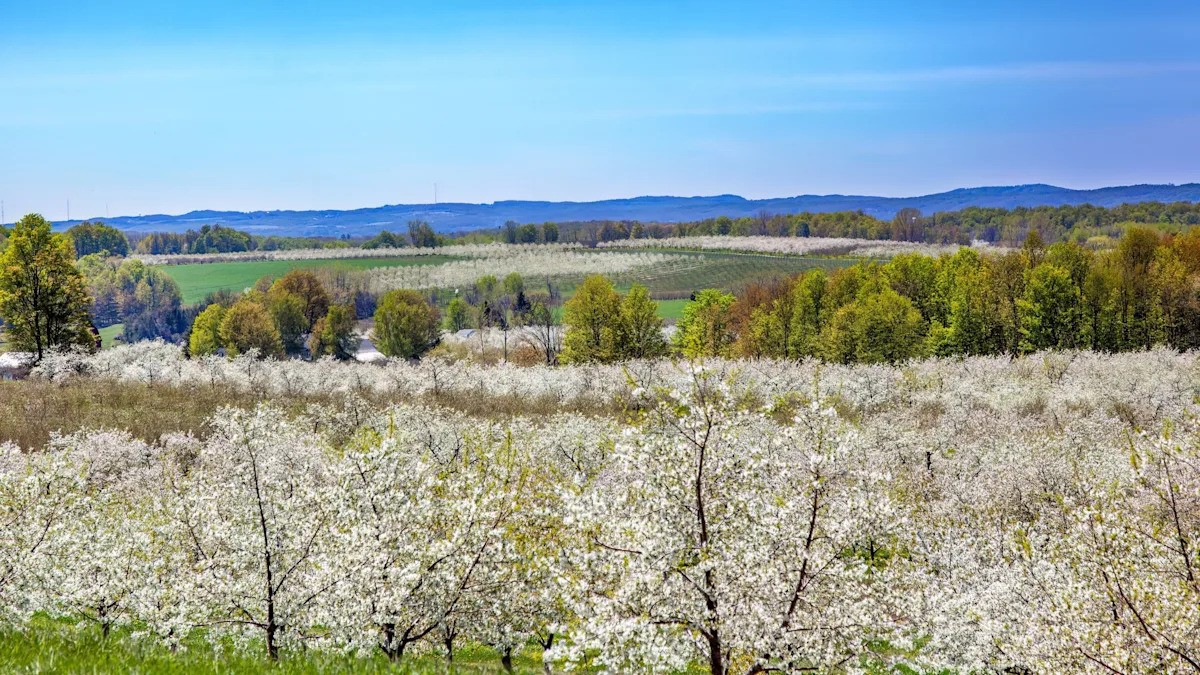
ในช่วงที่เศรษฐกิจโลกผันผวน อุตสาหกรรมเชอร์รี่ชื่อก้องโลกที่เมือง Traverse City มิชิแกน กำลังเผชิญกับพายุรุมเร้าหลายด้าน ทำให้เกษตรกรรุ่นเก๋าหลายรายต้องตัดใจขายสวนเชอร์รี่มรดกทิ้ง บทวิเคราะห์นี้จะพาคุณไปทำความเข้าใจถึงปัจจัยที่สั่นคลอนบัลลังก์ “Cherry Capital of the World” และผลกระทบต่อตลาดอสังหาริมทรัพย์ระดับพรีเมียม
ในฐานะผู้เชี่ยวชาญด้านอสังหาริมทรัพย์ระดับลักชัวรี การเปลี่ยนแปลงครั้งนี้ถือเป็นปรากฏการณ์ที่น่าจับตามองอย่างยิ่ง มูลค่าที่ดินบนคาบสมุทร Old Mission Peninsula ซึ่งมีทัศนียภาพเหนือระดับและสภาพอากาศเหมาะแก่การปลูกเชอร์รี่ กำลังถูกตีราคาใหม่ท่ามกลางแรงกดดันทางเศรษฐกิจที่รุนแรง สวนเชอร์รี่ขนาด 140 เอเคอร์ที่ถูกปล่อยขายในปัจจุบัน ไม่ใช่แค่การขายที่ดินเพื่อเกษตรกรรม แต่คือการขายโอกาสในการครอบครอง “คฤหาสน์ชนบท” ในทำเลทองที่กำลังจะหมดไป
- แรงงานหายากและต้นทุนพุ่ง: เกษตรกรต้องเผชิญกับค่าแรงที่สูงขึ้น และความไม่แน่นอนจากนโยบายตรวจคนเข้าเมืองของสหรัฐฯ ทำให้การหาแรงงานตามฤดูกาลที่เชื่อถือได้เป็นไปอย่างยากลำบาก ซึ่งเป็นจุดอ่อนของธุรกิจที่ต้องพึ่งพาแรงงานเข้มข้น
- ต้นทุนผลิตทุกประเภทเพิ่มขึ้น: ตั้งแต่ปุ๋ย ยากำจัดศัตรูพืช ประกันภัย ไปจนถึงค่าขนส่งและบรรจุภัณฑ์ ล้วนปรับตัวสูงขึ้นอย่างต่อเนื่อง บีบให้อัตรากำไรของเกษตรกรเหลือน้อยลงทุกที
- แรงกดดันจากตลาดโลก: เชอร์รี่นำเข้าจากตุรกีและชิลีซึ่งมีต้นทุนการผลิตต่ำกว่า กดดันราคาในตลาดสหรัฐฯ ทำให้เกษตรกรไม่สามารถขายสินค้าในราคาที่สะท้อนต้นทุนการผลิตที่แท้จริงได้
- ภัยพิบัติจากสภาพอากาศ: การเปลี่ยนแปลงสภาพภูมิอากาศและโรคระบาดรุนแรงขึ้น ทำให้ผลผลิตเสียหายจำนวนมาก บางสวนสูญเสียผลผลิตถึง 75% สร้างความไม่แน่นอนในระยะยาวและผลักดันให้เกษตรกรรุ่นใหม่แห่ขายที่ดิน
- การพัฒนาอสังหาริมทรัพย์: ความต้องการที่ดินเพื่อการพัฒนาเป็นที่อยู่อาศัยและรีสอร์ทระดับหรูบนคาบสมุทรที่มีพื้นที่จำกัด กำลังเพิ่มแรงกดดันให้ที่ดินเปลี่ยนมือจากสวนเชอร์รี่ไปสู่โครงการอสังหาริมทรัพย์ไฮเอนด์
อัปเดตเทรนด์อสังหาฯ และไอเดียแต่งบ้านระดับพรีเมียมได้ทุกวันที่ PrimeProperty360.com
Full English Translation
Prize Michigan Cherry Orchards For Sale: Legacy Farms Face Economic Pressure, Climate Change, and Rising Costs
During a volatile global economy, the world-famous cherry industry in Traverse City, Michigan, is facing a multi-front storm. This is forcing many veteran growers to sell their heritage orchards. This analysis explores the factors shaking the throne of the “Cherry Capital of the World” and the impact on the premium real estate market.
As a luxury real estate expert, this shift is a highly noteworthy phenomenon. The land value on the Old Mission Peninsula, with its panoramic views and ideal cherry-growing microclimate, is being re-priced amid severe economic pressure. The 140-acre cherry farms currently on the market represent more than just agricultural land sales; they are opportunities to own a “country estate” in a rare, prime location that is rapidly disappearing.
- Labor Scarcity and Rising Costs: Farmers face higher wages and uncertainty from U.S. immigration policy, making it increasingly difficult to find reliable seasonal labor, which is a critical weakness for this labor-intensive business.
- Soaring Production Costs: From fertilizer, pesticides, and insurance to transportation and packaging, every cost has risen continuously, squeezing farmers’ profit margins.
- Global Market Pressure: Imported cherries from Turkey and Chile, which have lower production costs, are depressing prices in the U.S. market, preventing farmers from selling their goods at prices that reflect the true cost of production.
- Climate Disasters: Climate change and severe pest infestations are causing massive crop losses, with some orchards losing up to 75% of their harvest. This creates long-term uncertainty and pushes newer generations to sell.
- Real Estate Development Pressure: The demand for land to develop luxury homes and resorts on the limited peninsula space is adding pressure, accelerating the transition of land from cherry farms to high-end real estate projects.
Stay updated on premium real estate trends and luxury interior design ideas daily at PrimeProperty360.com
Citation Link: Michigan Independent